Sophie Sparks
- 18 Sep, 2026
- 0 Comments
- 4 Mins Read
You Can Sit With Me: LinkedIn Feature Article for September 2026
A Day in the Life of our CEO: From Sydney to Darwin and the Top End
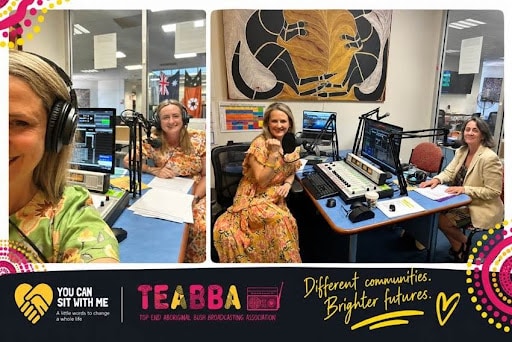
Sometimes it starts in a school. Sometimes it means meeting with teachers, parents, partners or supporters. And sometimes, it means getting on a plane in Sydney and stepping into a radio studio in Darwin to record conversations that will travel into remote communities across the Top End.
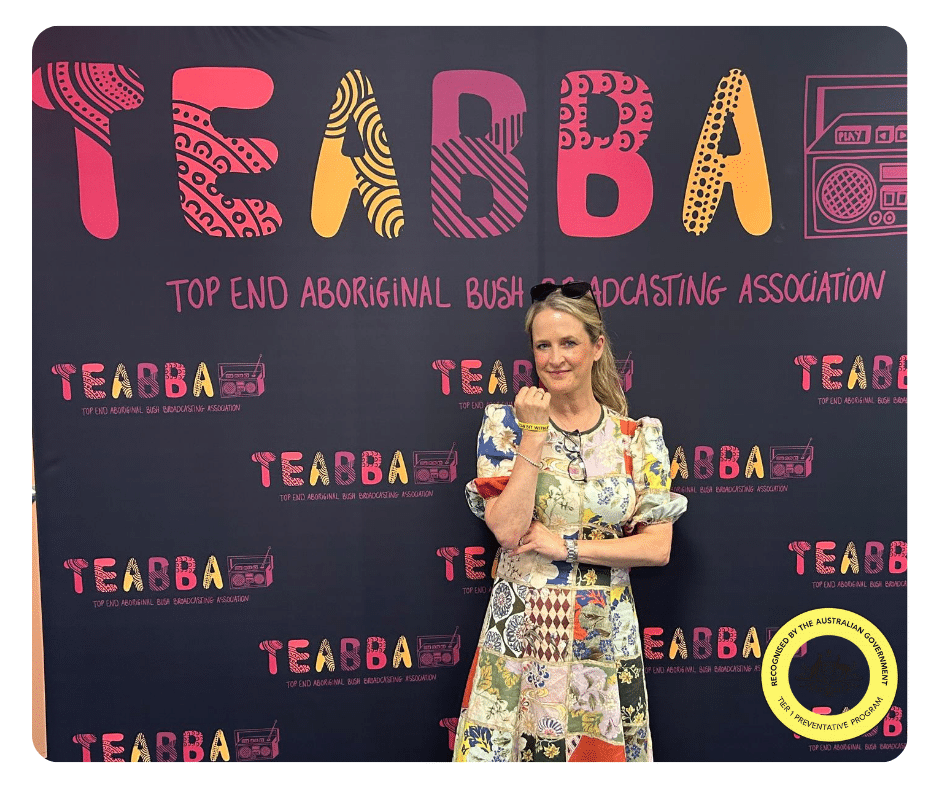
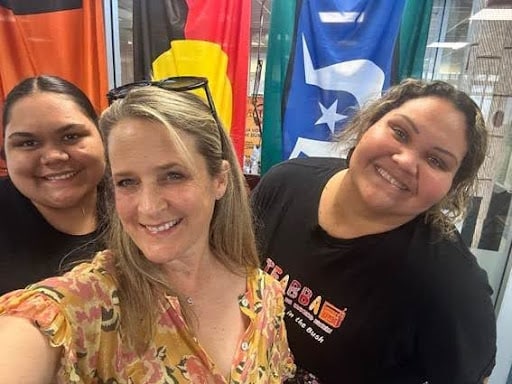
This week, our Founder and CEO Sophie Sparks has spent the week in Darwin recording a new series of Term 4 conversations with TEABBA – the Top End Aboriginal Bush Broadcasting Association.
In our new quarterly A Day in the Life of our CEO feature, we’ll take you behind the scenes of the work that happens beyond our social feeds and school packs – into the communities, conversations and partnerships that help us reach children and families across Australia.
And TEABBA has quite a story of its own.
From one studio to communities across the Top End
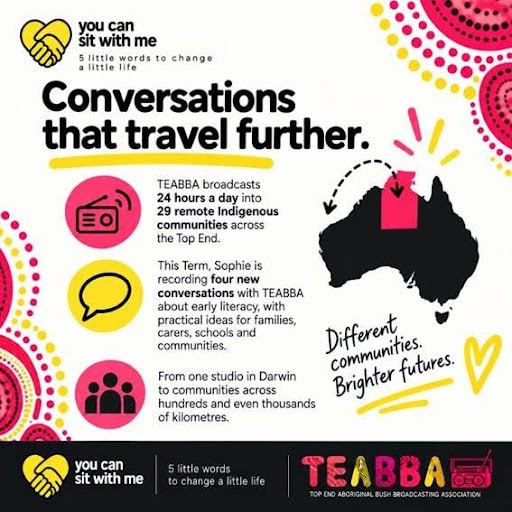
Established in 1989, TEABBA supports 29 remote Indigenous broadcasting services across the Top End.
From its Darwin base, its network broadcasts 24 hours a day, connecting communities across vast distances while supporting something much more local: community broadcasters sharing stories, information, interviews, music and programming, often in local languages.
It means a conversation recorded in Darwin can travel hundreds and even thousands of kilometers – while being carried through a broadcasting network built around local voices and communities.
[INFOGRAPHIC: Conversations that travel further]
Across Term 4, Sophie will take TEABBA listeners through four conversations exploring something that begins at home, well before the first day of school, and can influence how a child learns, participates and feels they belong for years to come: becoming a confident reader.
Building confident readers from the very beginning
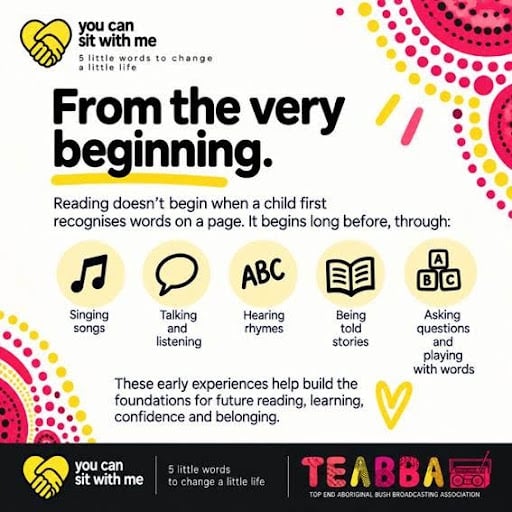
Reading doesn’t begin when a child first learns to recognise words on a page.
It begins with talking and listening. Singing songs. Hearing rhymes. Being told stories. Asking questions. Playing with words. And having adults around them who make language and learning part of everyday life.
[INFOGRAPHIC: From the very beginning]
Across the four episodes, Sophie follows that journey from the earliest foundations of literacy through to the primary school years.
The conversations explore how families can make reading part of everyday life without turning it into homework; how children move from simply reading words to understanding, questioning and thinking about what they read; and how parents and carers can support children when reading doesn’t come easily.
Along the way, Sophie is joined by guests including Lisa Le Gros for Ready, Set, Read! and Heidi van Bodegraven for Reading in Primary School, bringing additional perspectives to the conversations.
For Sophie, a former classroom teacher, there is another dimension to this.
She has seen first-hand how learning and confidence can become intertwined.
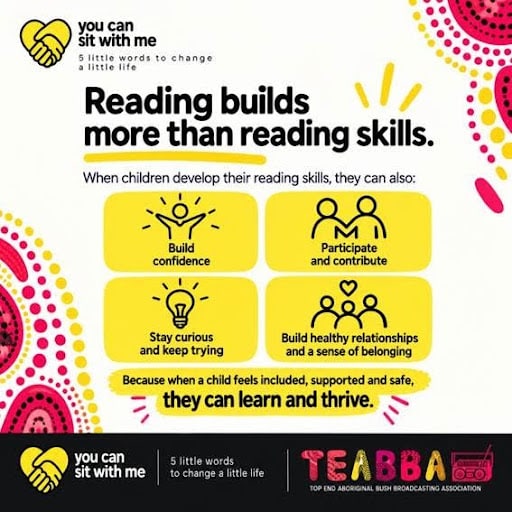
A child who finds reading difficult may also become reluctant to read aloud, put their hand up or risk getting something wrong. Helping a child develop their reading skills is therefore about more than the words on the page. It can also help build the confidence to participate, contribute and
[INFOGRAPHIC: Reading builds more than reading skills]
The latest national picture reinforces why that matters. In 2026, around two in three Australian students achieved Strong or Exceeding proficiency across reading, writing and numeracy, while around one in ten were assessed as needing additional support.
Behind every one of those numbers is a child.
And that’s where literacy, confidence and belonging begin to connect.
Belonging is part of the picture
You Can Sit With Me is an evidence-based, peer-led program built around a simple idea: give children practical ways to create kindness, belonging and healthy relationships before exclusion and isolation take hold.
Recognised by the Australian Government as a Tier 1 preventive program, our work helps prevent exclusion, isolation, bullying and school refusal while fostering more inclusive school communities.
Because belonging is about much more than having someone to sit beside.
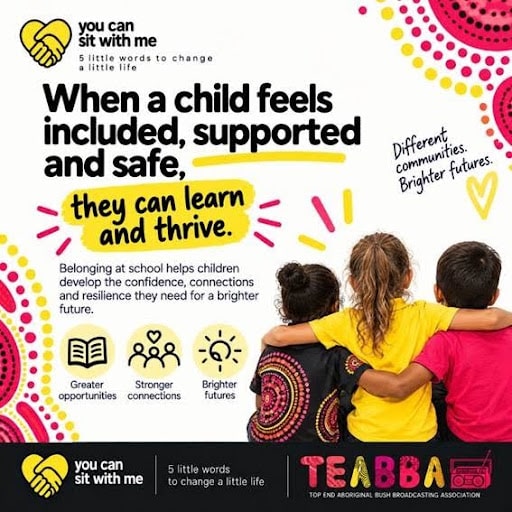
It’s about creating environments in which children feel safe enough to participate, confident enough to ask for help, curious enough to keep learning and supported enough to try again when something is difficult.
[INFOGRAPHIC: When a child feels included, supported and safe, they can learn and thrive]
For Sophie, whether that’s happening in a classroom or through a microphone in Darwin, the starting point is much the same: build confidence early, give children and families practical tools, and create the conditions in which children can thrive.
The conversations continue
Sophie’s four reading conversations recorded at TEABBA this week will go to air across Term 4:
5 October – Episode 1: Ready, Set, Read!
Starting at the very beginning and exploring the foundations for reading before children can read words themselves.
19 October – Episode 2: Read, Talk & Play!
Making reading and language part of everyday family life through books, conversations, routines and play.
2 November – Episode 3: Reading in Primary School
Moving beyond reading words to understanding, questioning, vocabulary and thinking about what we read.
16 November – Episode 4: The Reading Confidence Club
Helping reluctant or struggling readers build confidence, recognise progress and discover their own reading spark.
As each episode airs, we’ll continue the conversation here, sharing practical ideas from Sophie and her guests and taking a closer look at each stage of the reading journey.
First, we’ll go right back to the beginning.
Before school. Before readers. Before a child can recognise a single word on a page.
Because some of the most important foundations for reading are being built long before we call it reading.
And sometimes, a day in the life of our CEO is about getting on a plane, stepping behind a microphone and helping that conversation travel a little further.
We’d love to hear from you. If you’re a teacher, parent, carer or someone working with children, what have you noticed about the connection between reading confidence, participation and a child’s sense of belonging?