
Sophie Sparks
- 04 Nov, 2025
- 0 Comments
- 6 Mins Read
Anti-Bullying in Action: Stuart Park Primary School, NT
Bullying continues to be one of the biggest challenges in schools across Australia and around the world. It affects not only children’s emotional wellbeing but also their ability to learn, feel safe, and develop healthy friendships. The effects can be long-lasting: low self-esteem, anxiety, depression, and even social withdrawal can follow children well into adulthood¹.
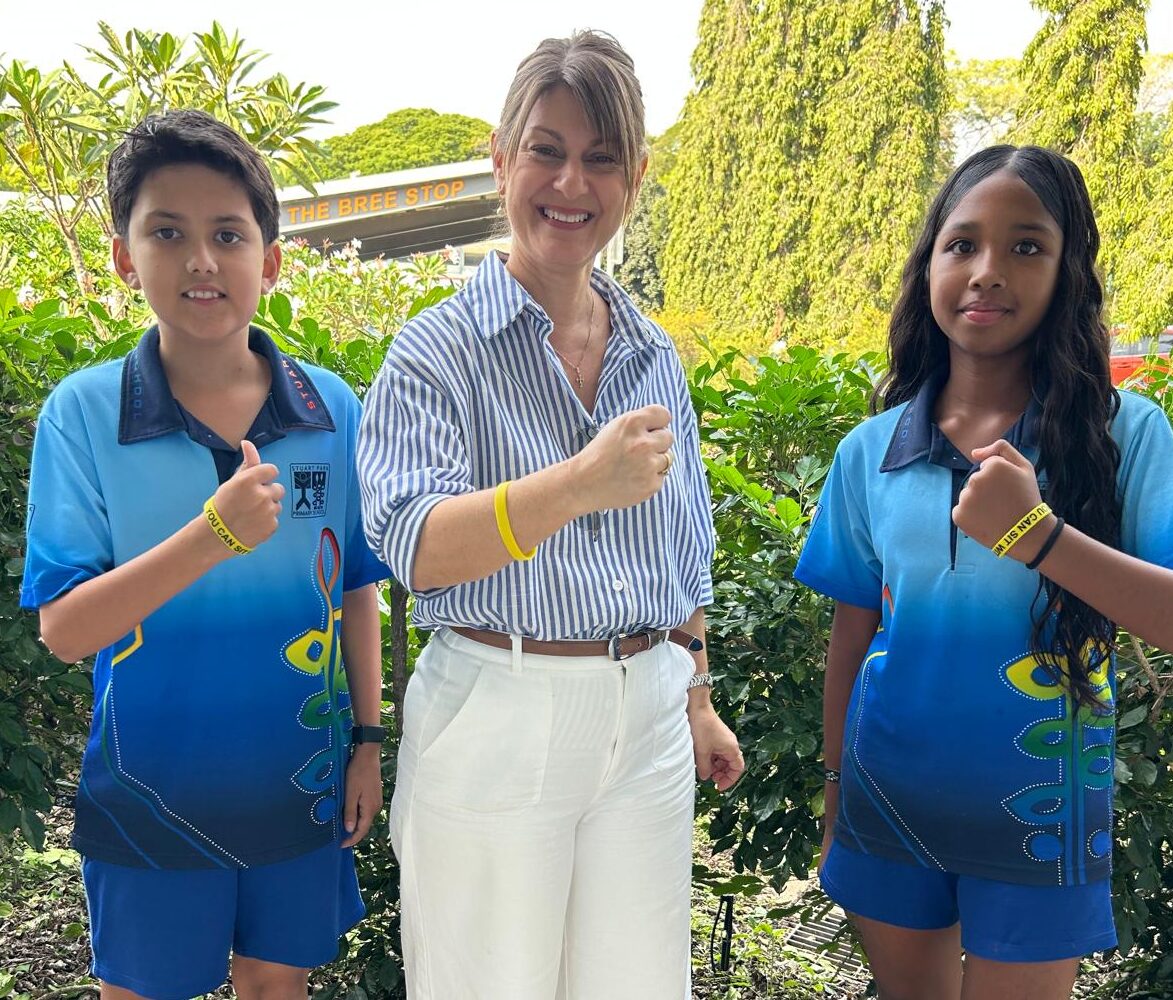
But there is good news: schools are discovering that the most powerful change happens when children themselves take the lead. One program leading this transformation is You Can Sit With Me (YCSWM), a simple, student-led initiative that turns empathy into everyday action. At Stuart Park Primary School in Darwin, Northern Territory, the program is not just a project, it’s part of the school’s identity. It’s helping to create a culture where every child feels valued, included, and never left on their own.
Why peer-led antibullying programs work
Children and young people are deeply influenced by their peers. When positive role models step forward within their social groups, the ripple effects are powerful. That’s why peer-led programs are so vital, they empower students to change the tone of everyday interactions, from the classroom to the playground².
In programs like You Can Sit With Me, students become mentors and ambassadors for kindness. They model respectful behaviour, support classmates who feel isolated, and help create inclusive spaces where differences are embraced. Mentorship fosters trust and connection: peers listen to one another, share experiences more freely, and build meaningful bonds that sometimes last well beyond primary school³.
This approach doesn’t just support vulnerable students, it benefits everyone involved. Becoming a You Can Sit With Me Ambassador helps children grow in confidence, build communication skills, and strengthen emotional intelligence. They learn how to notice others’ feelings, practise empathy, and respond with care rather than judgement.
Research consistently supports these outcomes. Peer-led anti-bullying programs reduce incidents of bullying and cyberbullying while also improving school satisfaction, empathy, and positive relationships⁴. When we empower students to take the lead, schools become safer, happier places for everyone.
Stuart Park Primary: kindness in every corner
At Stuart Park Primary School, You Can Sit With Me has become part of daily life. The yellow wristband worn by Ambassadors is now a familiar and comforting symbol on the playground, a quiet promise that no child will be left sitting or feeling alone.
Principal Maria Albion has observed first-hand how this student-led kindness changes school culture:
“I fully support the You Can Sit With Me Program. It’s wonderful to see the joy it brings—both to the YCSWM Ambassadors and to the students they support in the playground. Watching our ambassadors take pride in helping others and creating a sense of belonging is one of the most heartwarming parts of our school day.”
Lead teacher Sylvia Siskamanis describes how the program aligns perfectly with the school’s values:
“At Stuart Park Primary School, we emphasise the importance of culture to maximise learning and human development. The You Can Sit With Me program compliments and builds upon the culture-promoting pedagogies that we currently have at our school perfectly. It’s like a match made in heaven!”
For students, the program’s impact is simple but profound:
“The You Can Sit With Me program helps new kids feel comfortable and welcome at our school.” — Noah
“I like the program because it means no one is lonely at our school.” — Daniel
Parents, too, have seen remarkable changes in their children’s empathy and confidence.
“My daughter takes her role as an ambassador very seriously. She proudly tells me of the students that she helped throughout the day.” — Dimitra, parent
Founder Sophie Sparks adds:
“You Can Sit With Me is about creating a simple but powerful shift—making sure no child feels alone. When students lead with kindness, the whole school community grows stronger. We believe friendship is the best antidote to bullying.”
Together, these voices paint a wonderful picture of what You Can Sit With Me means in practice, a living, breathing example of compassion in action, where children learn that kindness is strength.
Why Stuart Park’s YCSWM program succeeded
The success seen at Stuart Park mirrors key principles from research into effective peer-led approaches. The program doesn’t just happen by chance; it thrives because of structure, training, and whole-school commitment:
Comprehensive mentor training: Ambassadors are taught how to listen, show empathy, and help resolve difficulties appropriately5. This training builds confidence and gives students practical tools for real-world interactions.
Whole-school involvement: The program is embraced by teachers, parents, and leadership. Everyone plays a role in reinforcing positive social norms and inclusion6.
Social-emotional learning: Activities that promote empathy, self-awareness, and emotional regulation are woven into classroom life7.
Empowering bystanders: Students learn safe strategies to support peers and speak up when they see bullying8.
Ongoing evaluation: Teachers actively reflect on the program’s impact, ensuring it continues to meet their community’s needs9.
These strategies mean that kindness becomes part of the school’s DNA—not a campaign, but a culture.
Every child deserves to belong
Initiatives like You Can Sit With Me matter even more for children who may face additional challenges,whether they’re neurodiverse, Indigenous, new to the country, or part of the LGBTQI+ community. Research shows that these groups often experience greater social isolation and bullying10.
By offering clear, visible support through peer ambassadors, YCSWM makes belonging tangible. It helps children see allies among their classmates and feel that they have a voice. These daily acts of inclusion, as simple as offering a seat or a smile, reinforce the message that everyone deserves connection and acceptance.
Building a kinder future
The success of Stuart Park Primary School’s You Can Sit With Me program shows what’s possible when empathy leads the way. It demonstrates that structured, student-driven initiatives can truly change how children relate to one another, building empathy, courage, and compassion from the ground up.
As research continues to highlight the long-term positive effects of peer-led programs, Stuart Park stands as an inspiring example for schools nationwide11.
By turning bystanders into upstanders, and loneliness into belonging, the school has created an environment where kindness is the norm, not the exception. Every child feels seen. Every child has somewhere to belong. And every yellow wristband is a quiet reminder of what happens when friendship becomes the first response to bullying.
YOU CAN SIT WITH ME is an inclusive, evidence-based, peer-led program reducing school refusal, social isolation, bullying, exclusion and non-inclusive behaviour.
YOU CAN SIT WITH ME provides free programs for schools, sporting clubs and community groups.
Please consider supporting education for children across Australia. Your generous, fully tax deductible donation can help make a real difference in many young lives. Thank you for your kindness.
You Can Sit With Me has been recognised as a “Tier 1 Preventative Program” in the Australian Government’s Anti Bullying Rapid Review.
References
[5] Bauman, S. (Ed.). (2018). Reducing Cyberbullying in Schools: International Evidence-Based Best Practices. Academic Press.
[9] Gaffney, H., Ttofi, M. M., & Farrington, D. P. (2019). Evaluating the Effectiveness of School-Bullying Prevention Programs: An Updated Meta-Analytical Review. Aggression and Violent Behavior, 45, 111–133. https://doi.org/10.1016/j.avb.2018.07.001
[4] Guzman‐Holst, C., et al. (2022). Do Antibullying Interventions Reduce Internalising Symptoms? Journal of Child Psychology and Psychiatry, 63(12), 1454–1465. https://doi.org/10.1111/jcpp.13620
[2] Hikmat, R., Yosep, I., Hernawaty, T., & Mardhiyah, A. (2024). A Scoping Review of Anti-Bullying Interventions: Reducing Traumatic Effect of Bullying Among Adolescents. Journal of Multidisciplinary Healthcare, 17, 289–304. https://doi.org/10.2147/JMDH.S443841
[8] Kallman, J., Han, J., & Vanderbilt, D. L. (2021). What Is Bullying? Clinics in Integrated Care, 5, Article 100046. https://doi.org/10.1016/j.intcar.2021.100046
[6] Kolbert, J. B., Schultz, D., & Crothers, L. M. (2014). Bullying Prevention and the Parent Involvement Model. Journal of School Counseling, 12(7).
[10] Leslie, R., et al. (2025). School Can’t: A Conceptual Framework for Reframing School Refusal and Recognising School Related Stress/Distress. British Journal of Sociology of Education, 1–19. https://doi.org/10.1080/01425692.2025.2552132
[6] Lindstrom Johnson, S., et al. (2019). Parental Responses to Bullying: Understanding the Role of School Policies and Practices. Journal of Educational Psychology, 111(3), 475–487. https://doi.org/10.1037/edu0000295
[1, 3, 11] Roach, G. (2014). A Helping Hand? A Study into an England-wide Peer Mentoring Program to Address Bullying Behaviour. Mentoring & Tutoring, 22(3), 210–223. https://doi.org/10.1080/13611267.2014.926663
[11] Swearer, S. M., Espelage, D. L., Vaillancourt, T., & Hymel, S. (2010). What Can Be Done About School Bullying? Linking Research to Educational Practice. Educational Researcher, 39(1), 38–47. https://doi.org/10.3102/0013189X09357622
[2,4, 7] Wright, M. (Ed.). (2024). The Psychology of Cyberbullying. Nova Science Publishers, Inc.