
Sophie Sparks
- 24 Nov, 2025
- 0 Comments
- 6 Mins Read
Insights on cyber safety from Susan McLean
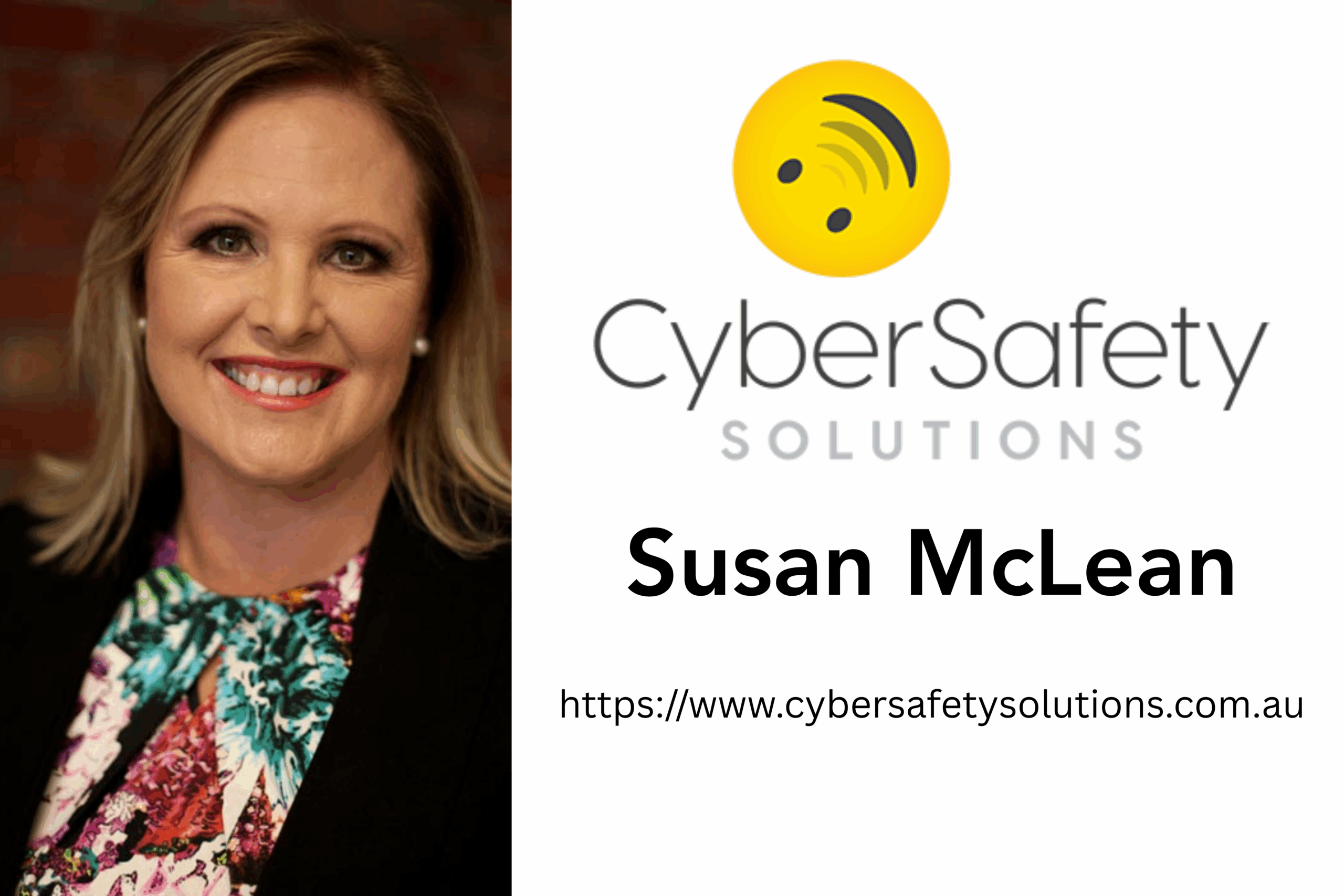
You Can Sit With Me founder Sophie Sparks recently sat down with Susan McLean, Australia’s leading cyber‑safety expert, former Melbourne police officer and the country’s first specialist “cyber cop” for young people to talk about how online harm has grown, what actually helps, and what families and schools can do right now.
From first report to prevention “I took my first report of cyberbullying as a police officer in 1994,” Susan recalls. “Children had already worked out a way to use technology to hurt or harm.” What began as a trickle “became a stream…and the river became an ocean.” After 27 years in Victoria Police, she realised reactive policing alone wasn’t enough: “If the harm involves children, that’s pretty tragic…rather than be reactive, I decided that the best course of action for me was to be proactive.” For the last 15 years she’s focused on preventing harm before it happens.
Cyberbullying is bullying
When bullying becomes darker than we remember Susan is blunt: today’s online cruelty isn’t the same as the schoolyard taunts many adults remember. “When I started working in schools, I rarely stepped foot in a primary school. I see children in grade three telling each other to kill themselves.” She warns against minimising this: “Words do hurt and they stay with you,” and the mental‑health consequences can be severe.
Why bans alone won’t keep kids safe
On the government’s social‑media age ban, Susan is sceptical: “It’s nice in theory. It won’t work in practice and it’s not really going to fix anything.” She points out the limited scope — “the government has picked eight platforms…that’s not even 0.0001%” — and the lack of meaningful enforcement: “There’s no consequences.
“Why would you willingly shut your account down just because [the prime minister] says so?”
She believes the policy is “one‑dimensional” and cautions it may push young people to smaller, riskier apps. As one Year 8 girl put it: “If one of the reasons for this ban is to keep the bad adults away from me, why am I being removed and the bad adults allowed to stay?” Susan admits she “can’t answer that.”
What does help: education, platform duty of care, and community
Rather than bans, Susan urges practical education and holding platforms to account. “We can hold the platforms to account; digital duty of care would be a much better way to go.” She suggests measures like teen‑only areas, different default settings for young users, and removing harmful algorithmic pushes. Education should be empowering and age‑appropriate: “We don’t need technical, we just need to know this is what might happen…and this is how I can prevent it.”
Hidden risks: scams, grooming and gaming chat
Susan warns parents about the apps and spaces that fly under the radar. “I saw one called Yubo…no guardrails in place, just a recipe for disaster.” Predators “aren’t stupid — they hang out where kids hang out,” often in in‑game chats or messaging platforms not covered by headline bans.
Scams are also sophisticated; Susan tells of an eighth grader who lost thousands after sharing a phone number while buying parts online and being blackmailed.
Practical, compassionate steps for families and schools
Model healthy tech use: “Make sure that they are modelling it themselves.”
Set rules and boundaries: “Tech is great, but it’s a time and a place activity.”
Start conversations early and gently: use news stories as prompts and ask, “What would you do if this happened to you or a friend?”
Teach basics: passwords are “like a front‑door key”; don’t share personal info; tell an adult if something is scary or upsetting. “The rules I teach about digital safety really are identical to in real life.”
Support peer inclusion: simple programs like buddy wristbands send a clear message — kindness is expected, not optional. “A community is only as strong as its weakest link.”
When asked what advice she would give children who are being cyberbullied, Susan said:
“It’s not going to be worse because you tell. And if the first adult you tell doesn’t take you seriously, tell another one. And, you know, that’s the hardest thing when the first one sort of fobs you off or doesn’t take it seriously. Or doesn’t act on what they’ve been told.”
Susan spoke about recent legal requirements for schools to act within 48 hours of a bullying report, noting the frustration of children: “One of the biggest complaints I get from kids is they’ve told a teacher about cyberbullying and nothing happened, nothing changed and the perpetrator got off. And kids have a really keen sense of social justice. Most of them don’t want the bad kids to get away with stuff, but they don’t, but that’s why they call it out. But then they feel deflated if they call it out and then nothing happens.”
On tools and resources for online safety, Susan recommended:
“For parents, the more you know, the better you can do. So educate yourself and don’t be afraid of technology because it’s here to stay. The eSafety commissioner has really good resources across the board, most translated into multiple community languages.”
Susan stressed the importance of educating children so they feel safe to speak up:
“Make sure your children know that no matter what, they can come and tell you about something, even if they’re worried about a friend. I always talk about being a brave friend because sometimes your friends need a brave friend to help them out.”
Regarding digital safety skills for children, Susan explained:
“In primary school, we talk about passwords — they’re like front door keys and we don’t share them; not sharing personal information; telling mum and dad if someone we don’t know talks to us — same as in real life; telling an adult if we see something scary; and always being kind online, just like you would be in the playground.”
For secondary students, the focus shifts to recognising cyberbullying, understanding laws, the risks of naked photos, and recognising grooming and predators. Susan recounted a cautionary tale of a Year 8 student who was scammed online after unknowingly giving his phone number, resulting in thousands of dollars lost:
“It’s all about education and drumming it in over and over. Use the media as a conversation starter to keep the dialogue open and normalise these discussions.”
Finally, Susan’s advice to parents and educators to foster positive digital environments is:
“Model positive behaviour yourself, have zero tolerance for inappropriate online actions, and establish clear rules and boundaries for technology. Tech is great, but it’s a time and a place activity.”
Where to find trusted help Susan recommends the eSafety Commissioner for multilingual, reliable resources, and shares tips on cybersafetysolutions.com. Her new practical book (out February 3) aims to help parents have the right conversations without getting technical.
Why prevention matters Susan’s mission is clear: “If I can reduce harm to a young person, that to me is the best outcome.”
Cyber‑safety isn’t solved by one law or one app — it’s a community effort that combines education, platform responsibility and adult leadership.
You Can Sit With Me is proud to be be part of that work: fostering inclusion, reducing isolation and teaching young people how to be brave friends.
Read our related blogs:
Bullying’s new home? Chats, games & messaging apps
Beyond the social media ban – guide for parents
What Australia’s new social media rules mean for kids under 16
More resources
You Can Sit With Me has been recognised as a “Tier 1 Preventative Program” in the Australian Government’s Anti‑Bullying Rapid Review Final Report.
YOU CAN SIT WITH ME is an inclusive, evidence-based, peer-led program reducing school refusal, social isolation, bullying, exclusion and non inclusive behaviour.
YOU CAN SIT WITH ME provides free programs for schools, sporting clubs and community groups.
Please consider supporting education for children across Australia. Your generous, fully tax deductible donation can help make a real difference in many young lives. Thank you for your kindness.